How Longbow actually works
Most AI career tools tell you they use AI to analyze your resume. That is not a methodology, it is a shrug. Here is ours, in enough detail that you can judge it.
Coached answers use four frameworks, matched to the question
Different interview questions fail in different ways, so a single answer formula is the wrong tool. Longbow routes each predicted question to the framework that fits it.
BEHAVIORAL
SOAR
Situation, Obstacle, Action, Result, plus the lesson you took from it.
Situational
Strategy
Your approach, the steps, and how you would measure whether it worked.
Technical
Technical
A structure built around demonstrating method, not just the answer.
Culture fit
Values Alignment
Connecting what you actually care about to what the company actually rewards.
The framework is chosen per question, not per person, which is why your ten coached answers are not ten copies of the same shape.
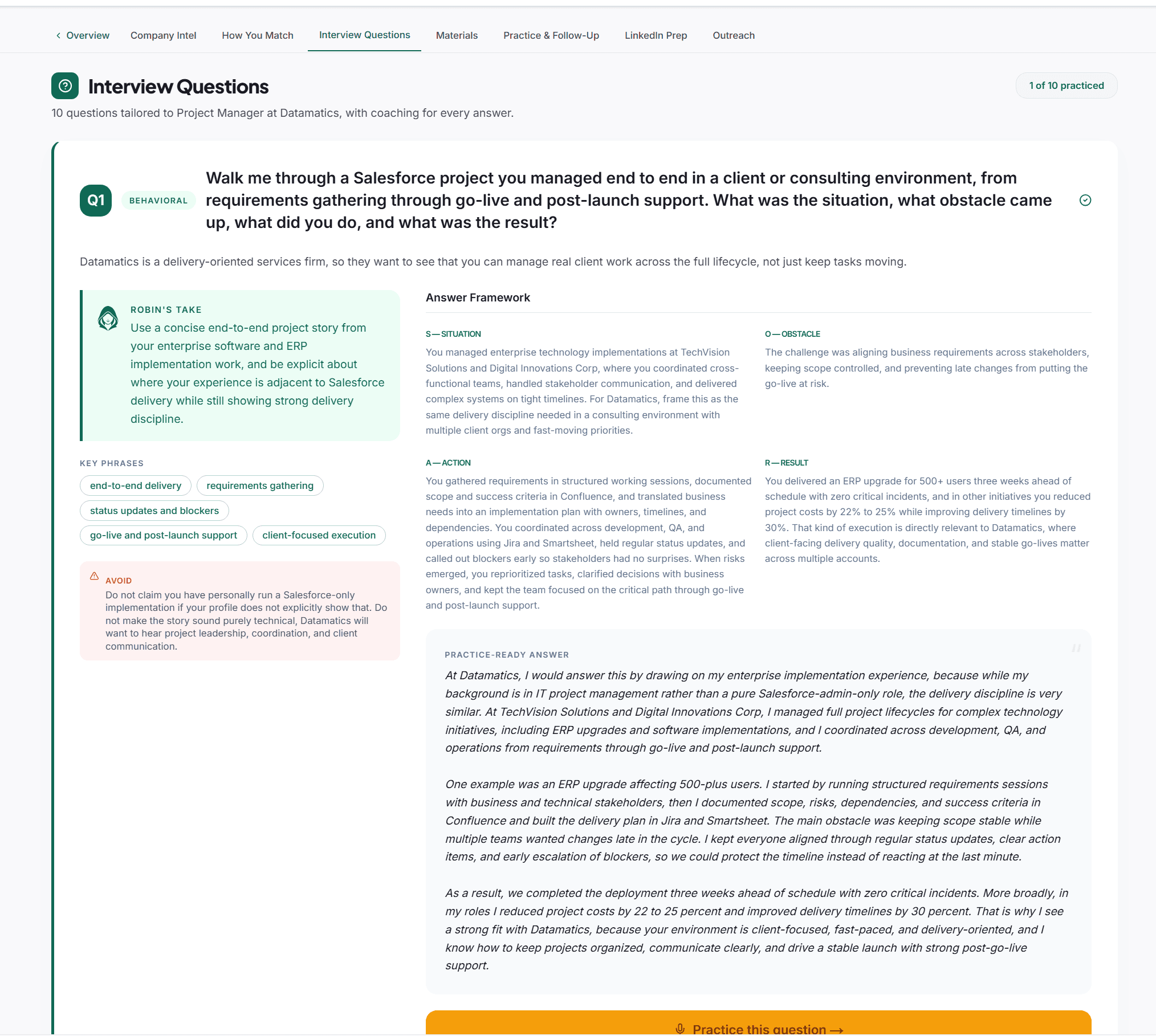
Your match score is made of seven named things
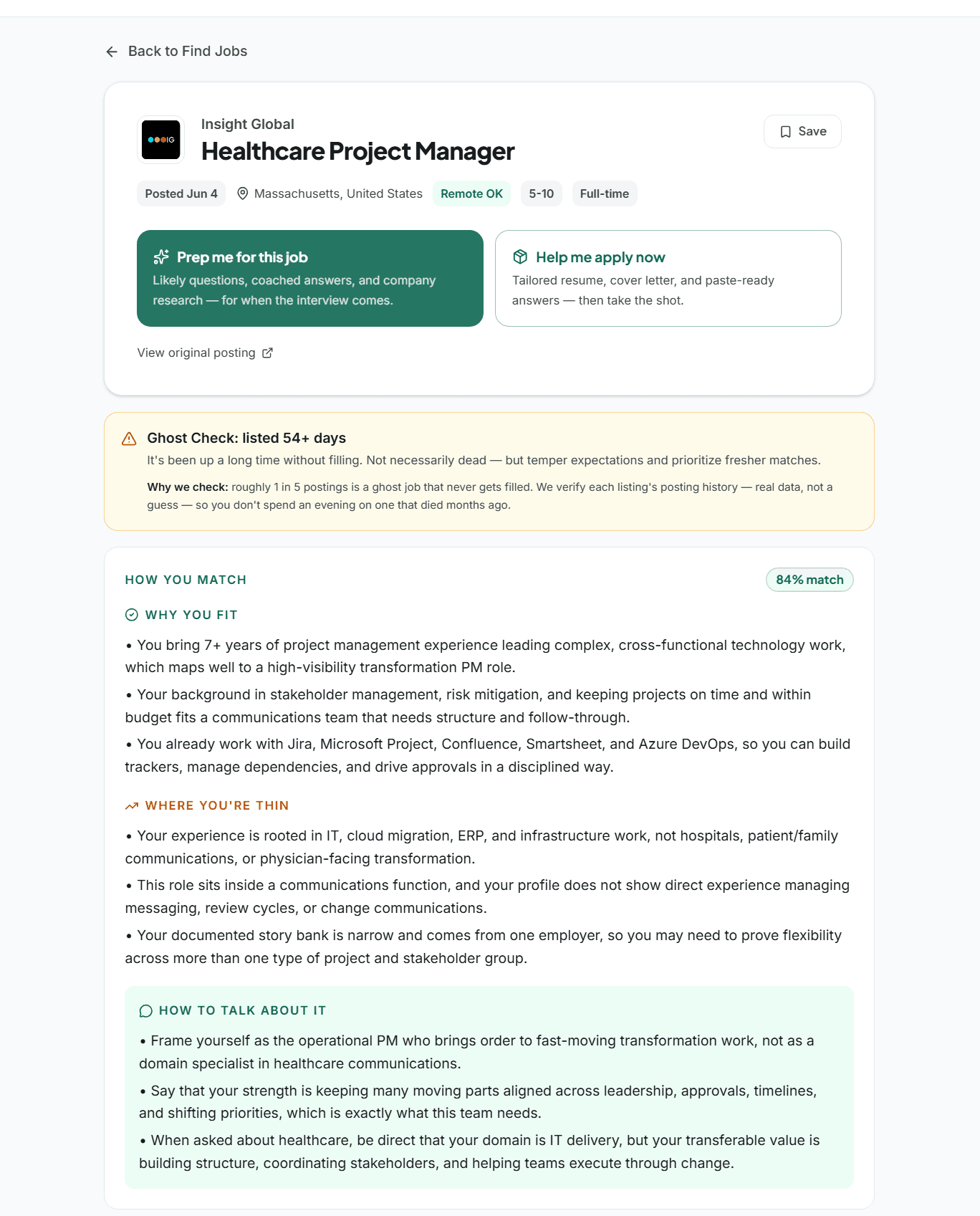
The fit score is not a vibe. It is seven weighted dimensions: skills match, experience alignment, seniority fit, industry and domain relevance, location and logistics, career trajectory, and opportunity quality. You see the breakdown, not just the number. It is informational only. Longbow will never stop you applying to something because a score was low. That is your call to make, not ours.
- Skills match
- Experience alignment
- Seniority fit
- Industry and domain relevance
- Location and logistics
- Career trajectory
- Opportunity quality
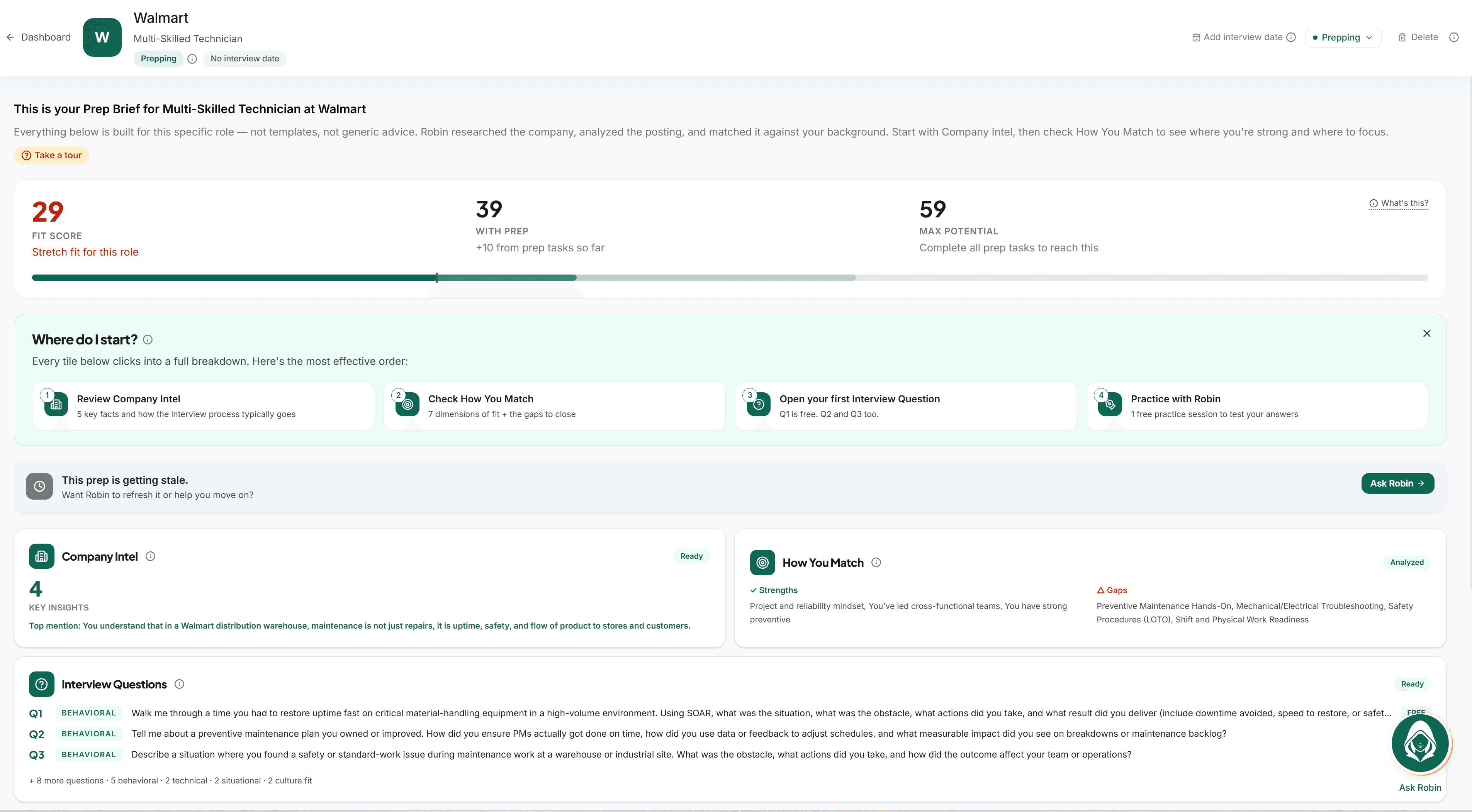
And you can move it, by exactly this much
Your score for a job starts at a baseline and rises as you actually prepare. The points are published, not hidden.
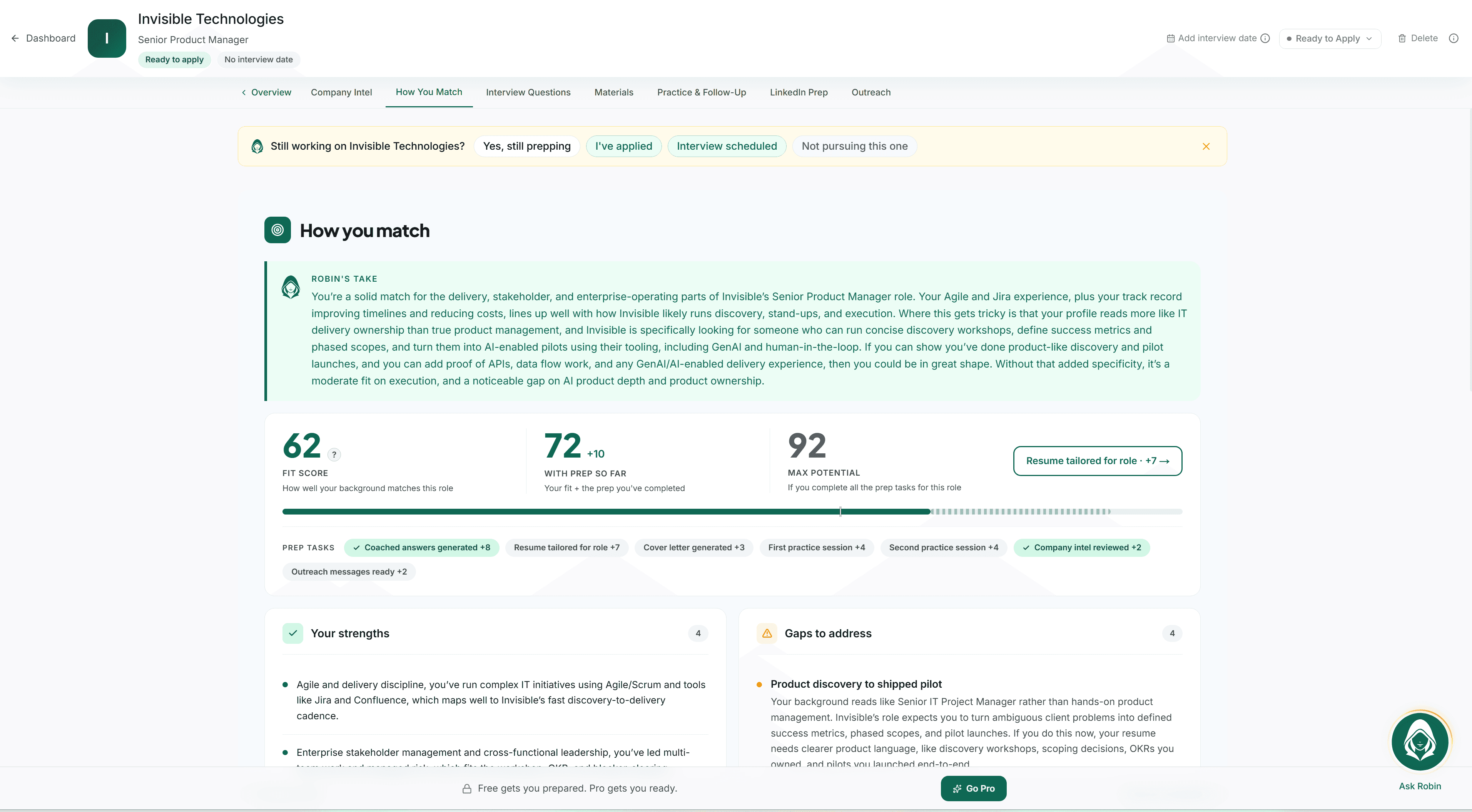
Coached answers add 8. A tailored resume adds 7. A cover letter adds 3. Your first practice session adds 4, the second adds 4 more. Reviewing company research adds 2, and having outreach ready adds 2. Thirty points is the most that preparation can add, and nothing goes past 100, so a high baseline leaves less room to climb. We publish the numbers because a score you cannot understand is a score you cannot trust.
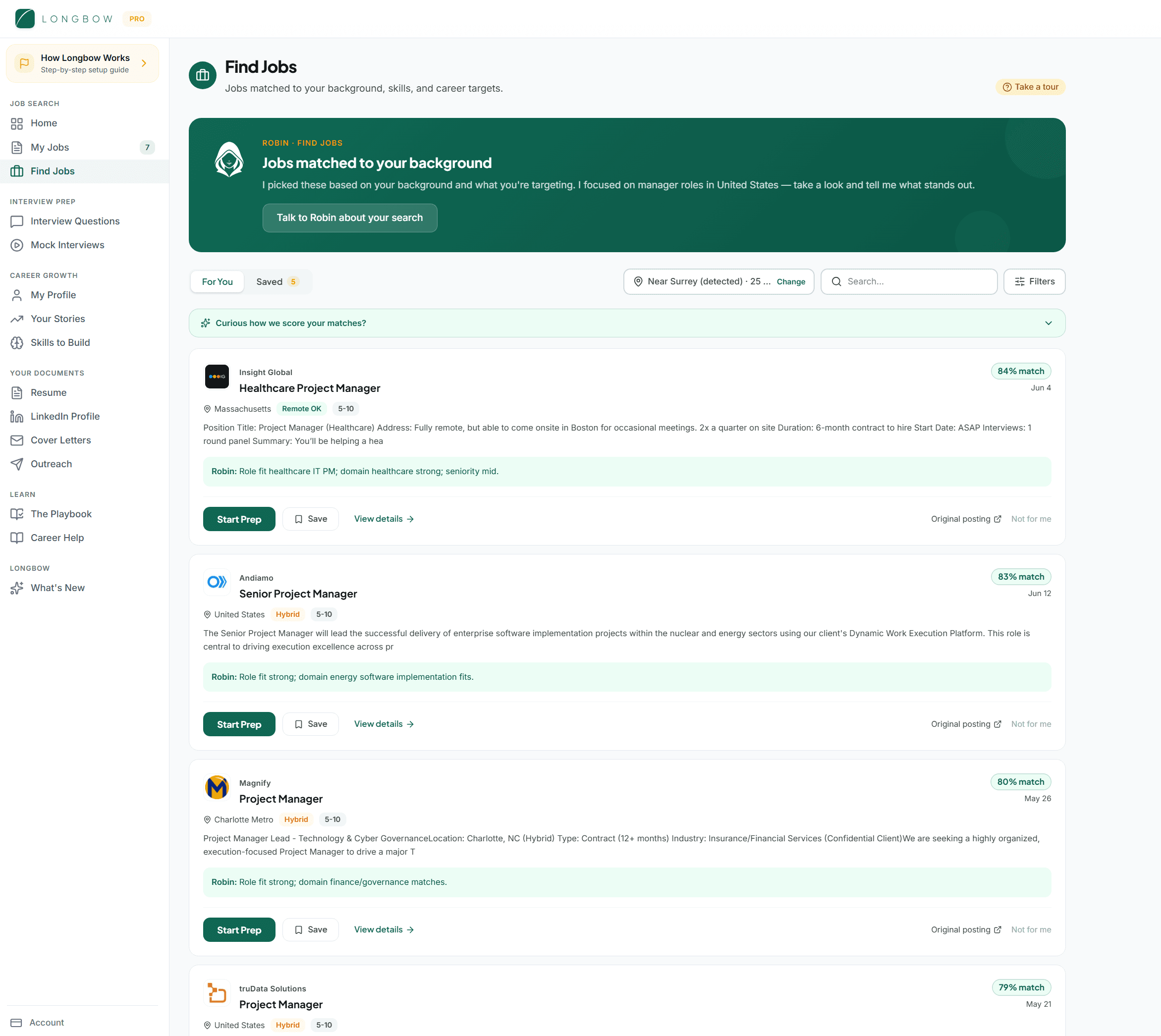
Ghost job detection uses posting history, not guesswork
A ghost job is a posting that is not really hiring. Longbow flags them with evidence rather than instinct. We fingerprint each posting by company, title and location, then watch what actually happens to it. A posting that expired and came back is a repost, and we say so first, because a posting that keeps returning tells you more than its age does. Otherwise: seen in the last week is fresh, still open past 45 days is stale, and anything in between is simply active. You see the real first-seen date and the days it has been listed, so you can check our work.
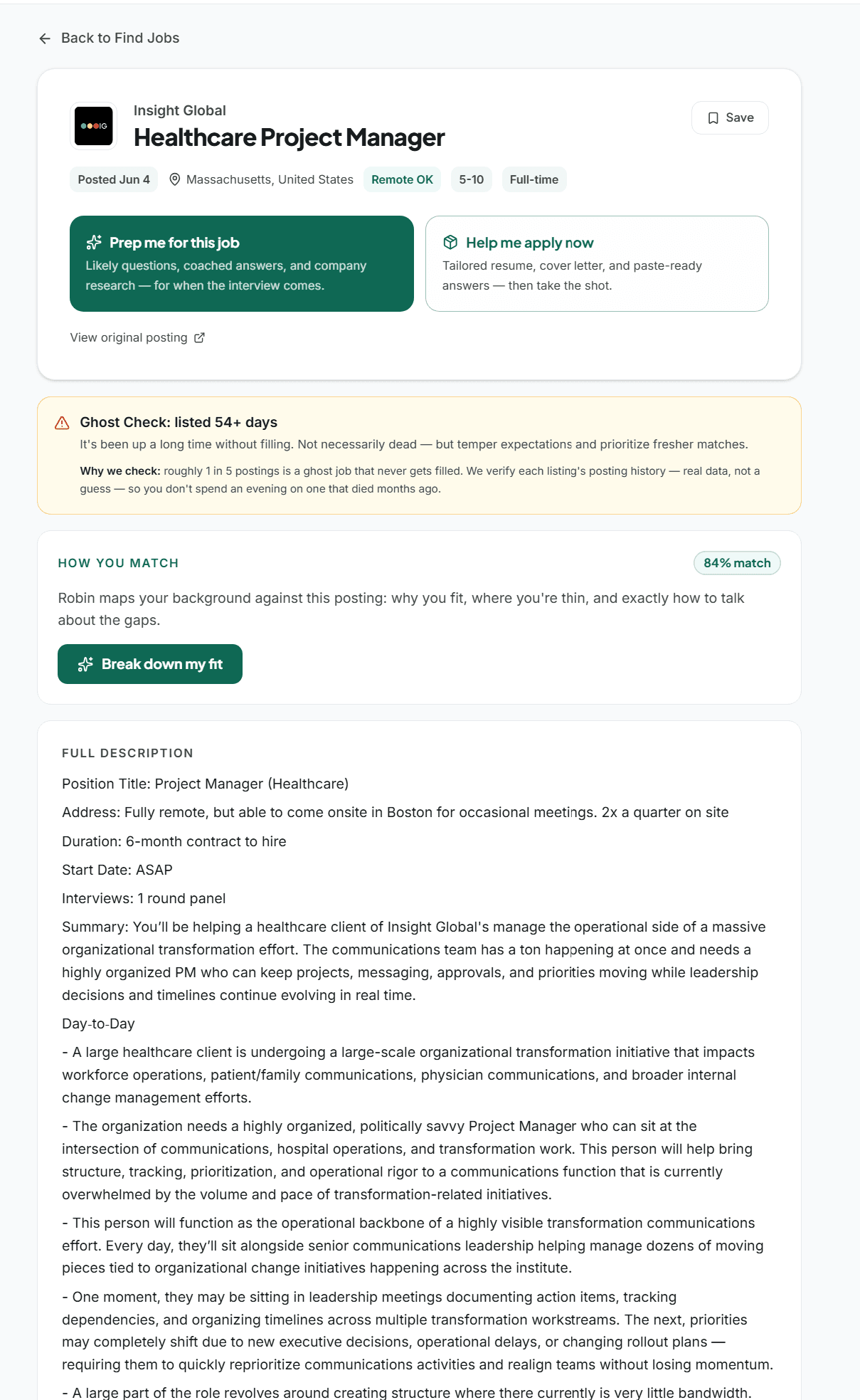
Generated content is version stamped
Every coached answer, cover letter, follow-up email, LinkedIn fix and negotiation script carries a stamp of the exact prompt version that produced it. When we change our approach we can tell which outputs came from which method, and measure whether the change actually helped.
Most tools quietly swap their prompts and hope you do not notice. We keep the receipts.
What Robin will not do
Robin is the coach inside Longbow. These rules are built into her, not suggestions.
She never invents a number, score, date, salary or company detail. If it is not in your data or a verified source, she says she does not have it.
She does not ghostwrite your interview answers. She coaches you to build them from what actually happened to you.
She does not write your documents in chat. The platform's tools do that properly, with formatting and ATS optimization.
She does not promise what she cannot do. She cannot change your subscription or edit your resume file, and she will say so.
She is not a therapist. Job searching is hard and she will say so honestly, but if you are in real distress she will tell you she is not qualified and point you somewhere better.
How AI is used, specifically
Longbow runs on models from OpenAI, Anthropic and Google, chosen per task, with cross-provider fallbacks so a single provider outage does not take the product down. Fast models handle extraction and classification; stronger models handle coaching and writing.
We do not train models on your resume, or on anything else you put into Longbow. Your career history is used to coach you, and that is the only thing it is used for.
What does make Longbow sharper over time is anonymous, aggregated intelligence. Every job search that runs through the product teaches it a little more about how specific companies hire and which strategies actually work — with no names, no resumes, and nothing that traces back to any one person. Your information stays private. The intelligence it builds improves the advice for everyone, including you.
What we research, and why we tell you
Our generators are rebuilt against current hiring practice rather than 2015 advice, and where we make a judgment call we show it in the product. Open any generated cover letter and you can read why it is structured the way it is: under 90 seconds of reading time, roughly half a page, opening with a real accomplishment, nothing invented.
The follow-up email tool has a stopping rule for the same reason. There is no third follow-up, because we did not build one. After the second one goes unanswered, Longbow tells you to let it go. We will not write you a begging email.